 中传云资讯系统 中传云资讯系统
【双语】你好!中国 | 身穿藏袍,山海逍遥
2024-03-07 17:54
来源:
文旅中国
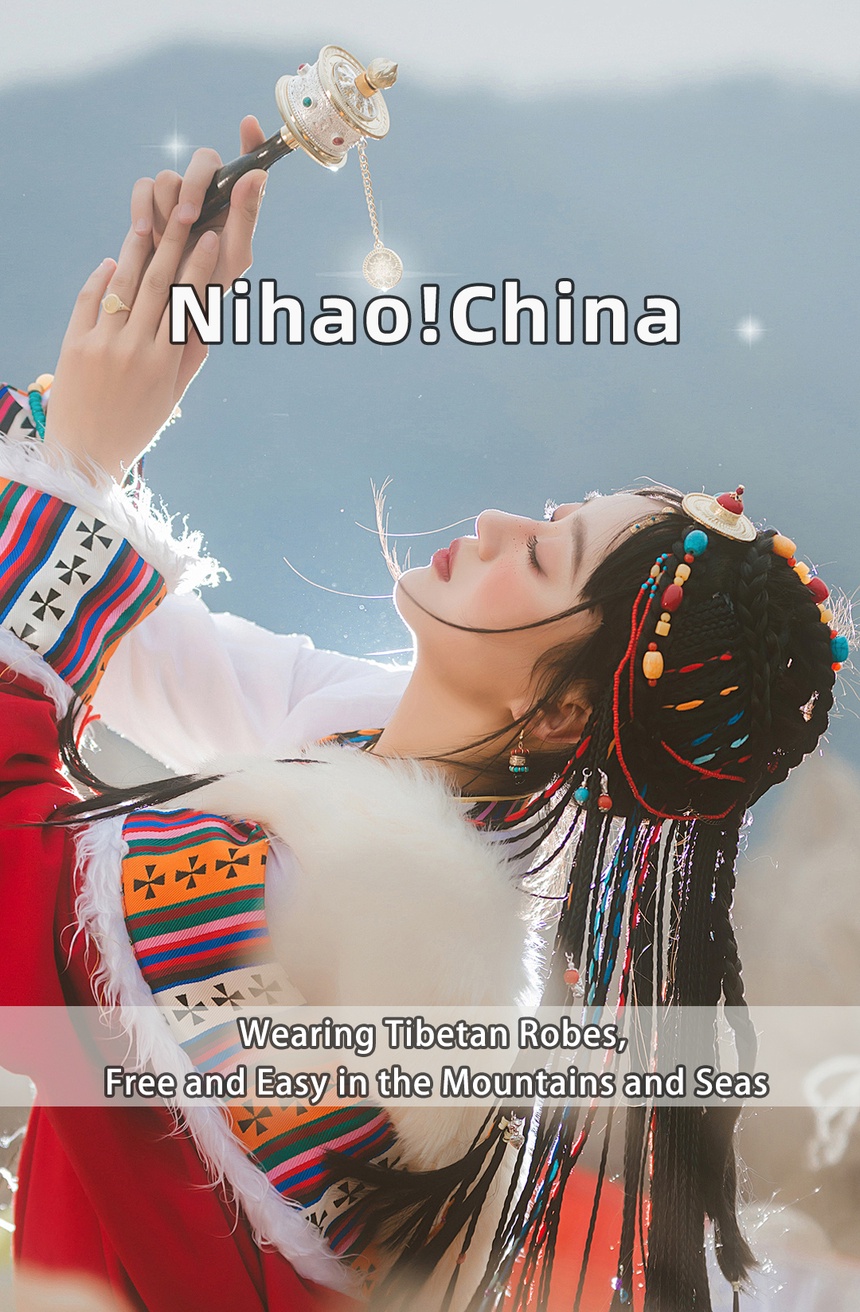
藏族服装具有悠久的历史,据史料考证,早在公元前11世纪前后,藏族的服饰,可能就已具备有现代藏族服装的基本特征了。
Tibetan clothing has a long history. According to historical records, as early as around the 11th century BC, Tibetan clothing may have had the basic characteristics of modern Tibetan clothing.
藏袍很能体现藏族人民的审美观念。在藏袍的领子、袖口、衣襟和底边会镶上绸子、彩布等,以前还会镶上虎皮、豹皮。而在藏袍上镶虎皮和豹皮,自有其历史渊源:吐蕃时期,赞普(吐蕃首领)通常给有战功的将士赐赏虎皮和豹皮,作为战胜者和英雄的标志。那些边上镶嵌的彩布也有规则,从外向内颜色是蓝、绿、红、黄、白等颜色的布料。高原除了短暂的夏季以外,其余的时候天气大多寒冷,所以,以前牧民几乎一年中三分之二的时间都穿皮袄。
Tibetan robes reflect the aesthetic views of the Tibetan people. Silk, colored cloth, tiger skin, and leopard skin were traditionally used to trim the collars, cuffs, fronts, and bottoms of Tibetan robes. The use of tiger and leopard skins on Tibetan robes has its historical origins: during the Tubo period, the Tibetan king would often reward soldiers with tiger and leopard skins as symbols of victory and heroism. There are rules for the colored cloth used on the edges of Tibetan robes. The colors, from outside to inside, are blue, green, red, yellow, white, and other colors. Except for the brief summer season, the weather on the plateau is mostly cold, so in the past, herdsmen wore fur coats for nearly two-thirds of the year.
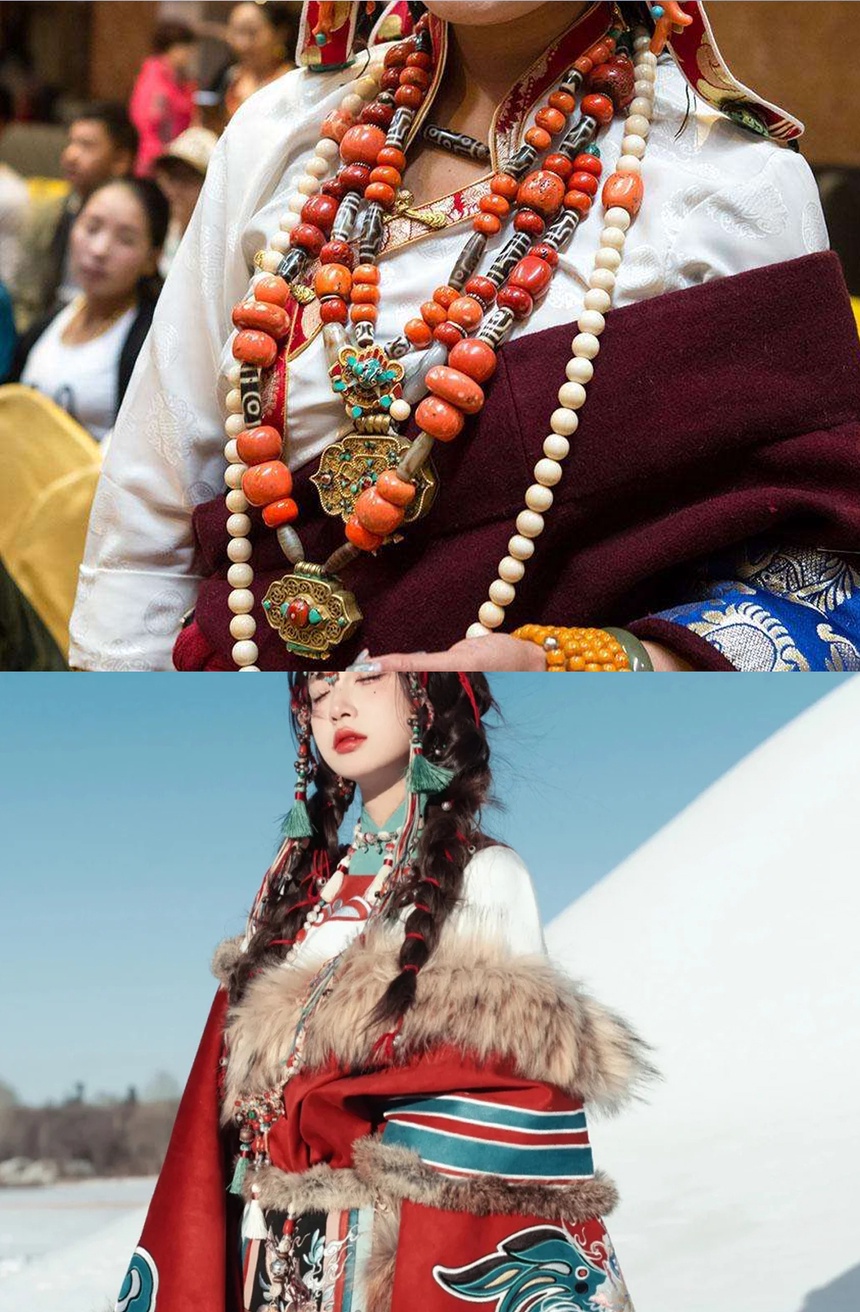
藏族着装少不了种种饰物的点缀,它们通常用金、银、绿松石、珊瑚、珍珠、天珠、玛瑙、蜜蜡等制作,佩戴之后显得格外华丽珍贵。
Tibetan attire is incomplete without various ornaments, which are usually made of gold, silver, turquoise, coral, pearls, dzi beads, agate, and amber. After wearing them, they appear particularly splendid and precious.
从远古的蔽体御寒,到今天的视觉艺术,在悠长的千百年岁月中,不断演变、融合、传承、创新,将民族的生活习俗、审美情趣、文化心态、宗教观念等倾注于飞针走线之中,绽放在皮缎棉麻之上,成为整个民族文化的重要组成部分。
From ancient times, protecting against the cold to today's visual art, in the long years of history, it has continuously evolved, merged, inherited, and innovated, pouring the nation's customs, aesthetic tastes, cultural attitudes, religious beliefs, etc., into the stitches and threads, blooming on leather, satin, cotton, and hemp, becoming an important part of the entire national culture.